Introduction
In today's digital landscape, having a website is only the first step toward building a successful online presence. With millions of websites competing for attention, simply publishing content is not enough. Businesses need a strategy that helps potential customers find them when searching online. This is where Search Engine Optimization (SEO) plays a vital role.
SEO is one of the most effective digital marketing techniques for improving website visibility, attracting organic traffic, and generating long-term business growth. Whether you run a small local business, an e-commerce store, or a large enterprise website, SEO can help you reach the right audience at the right time.
Understanding SEO
Search Engine Optimization (SEO) is the process of improving a website so that it ranks higher on search engine results pages (SERPs) for relevant keywords and phrases. Search engines like Google aim to provide users with the most useful and relevant information. SEO helps search engines understand your website and determine whether your content matches what users are searching for.
Unlike paid advertising, SEO focuses on earning traffic naturally. When your website appears in top search results, users can find and visit your site without you paying for every click.
SEO involves several elements, including keyword optimization, high-quality content creation, technical website improvements, link building, user experience enhancement, and mobile optimization.
Why Website Visibility Matters
Website visibility refers to how easily people can find your website through search engines. The higher your website ranks, the more visible it becomes to potential visitors.
Studies consistently show that most users rarely go beyond the first page of search results. Websites appearing in the top positions receive significantly more clicks than those ranked lower. If your business is not visible in search results, you may be missing valuable opportunities to connect with customers actively searching for your products or services.
Improved visibility helps businesses:
- Reach a larger audience
- Build brand awareness
- Generate qualified leads
- Increase website traffic
- Improve sales and conversions
- Strengthen online credibility
SEO is the foundation that helps businesses achieve these goals.
How SEO Increases Organic Traffic
Organic traffic refers to visitors who arrive at your website through unpaid search results. These visitors are often highly valuable because they are actively searching for information, products, or services related to your business.
Here are the key ways SEO helps increase organic traffic.
1. Targeting the Right Keywords
Keywords are the terms people type into search engines when looking for information. Effective SEO starts with understanding what your audience is searching for.
For example, if you own a digital marketing agency, potential customers might search for:
- Digital marketing services
- SEO company near me
- Social media marketing agency
- Best digital marketing agency
By optimizing your website content around relevant keywords, you increase the chances of appearing in search results when users search for those terms.
Keyword research helps businesses identify high-value search terms that attract potential customers rather than random visitors.
2. Creating High-Quality Content
Content is one of the most important components of SEO. Search engines prioritize websites that provide valuable, informative, and relevant content.
When businesses publish useful blog posts, guides, articles, videos, and resources, they create more opportunities to rank for various search queries.
High-quality content helps by:
- Answering user questions
- Solving customer problems
- Building authority in the industry
- Increasing engagement
- Encouraging visitors to spend more time on the website
For example, a fitness center may publish blogs about workout routines, nutrition tips, and weight loss strategies. These articles can attract users searching for fitness-related information and introduce them to the business.
3. Improving On-Page SEO
On-page SEO refers to optimizing individual web pages to improve rankings and user experience.
Important on-page SEO factors include:
Optimized Title Tags
Title tags tell search engines and users what a page is about. Well-written titles containing relevant keywords can improve click-through rates.
Meta Descriptions
A compelling meta description encourages users to click on your website from search results.
Header Tags
Proper use of headings helps organize content and improves readability for both users and search engines.
Internal Linking
Linking related pages within your website helps visitors navigate easily while allowing search engines to understand your site structure.
Keyword Placement
Using keywords naturally throughout the content helps search engines identify the topic of the page without appearing forced or spammy.
4. Enhancing User Experience
Search engines increasingly prioritize websites that provide a positive user experience.
Factors affecting user experience include:
- Fast page loading speed
- Mobile-friendly design
- Easy navigation
- Clear website structure
- Readable content
- Secure browsing experience
When visitors can easily find information and navigate your website, they are more likely to stay longer and engage with your content. Search engines interpret these positive signals as indicators of quality.
5. Mobile Optimization
Mobile devices account for a significant portion of internet traffic worldwide. As a result, Google uses mobile-first indexing, meaning it primarily evaluates the mobile version of a website when determining rankings.
A mobile-friendly website offers:
- Responsive design
- Fast loading times
- Easy navigation
- Proper text formatting
- Touch-friendly buttons
Businesses that optimize their websites for mobile users often experience better rankings and increased organic traffic.
6. Building Website Authority Through Backlinks
Backlinks are links from other websites pointing to your website. They act as votes of confidence, signaling to search engines that your content is trustworthy and valuable.
High-quality backlinks from reputable websites can significantly improve search rankings.
Some ways to earn backlinks include:
- Publishing valuable content
- Guest blogging
- Creating industry research
- Developing shareable infographics
- Building relationships with industry influencers
The more authoritative and relevant backlinks your website earns, the stronger its credibility becomes in the eyes of search engines.
7. Technical SEO Improvements
Technical SEO ensures that search engines can efficiently crawl, index, and understand your website.
Key technical SEO elements include:
- XML sitemaps
- Secure HTTPS protocol
- Structured data markup
- Fast website speed
- Clean URL structure
- Fixing broken links
- Optimizing crawlability
A technically optimized website helps search engines access content more effectively, leading to improved rankings and visibility.
8. Local SEO for Nearby Customers
Local SEO is particularly important for businesses that serve specific geographic areas.
When users search for terms like:
- Restaurant near me
- Dentist in Mumbai
- Digital marketing agency in Bangalore
Search engines display local results based on location and relevance.
Local SEO strategies include:
- Optimizing Google Business Profile
- Collecting customer reviews
- Using local keywords
- Building local citations
- Creating location-specific content
Effective local SEO helps businesses attract nearby customers who are ready to make purchasing decisions.
The Long-Term Benefits of SEO
Unlike paid advertising campaigns that stop generating traffic once the budget ends, SEO delivers long-lasting benefits.
Sustainable Traffic Growth
Well-optimized content can continue attracting visitors for months or even years after publication.
Better Return on Investment
Although SEO requires time and effort, the long-term return often exceeds many other marketing channels because traffic is earned rather than purchased.
Increased Brand Credibility
Users generally trust websites that appear at the top of search results. High rankings create a perception of authority and reliability.
Higher Conversion Rates
Organic visitors are often highly targeted because they are actively searching for specific information or solutions. This can result in higher conversion rates compared to other traffic sources.
Competitive Advantage
Businesses that invest in SEO gain a stronger online presence than competitors who neglect optimization. Higher visibility often translates into greater market share and customer acquisition.
Common SEO Mistakes to Avoid
While SEO offers tremendous benefits, certain mistakes can limit success.
Ignoring User Intent
Focusing only on keywords without understanding what users actually want can result in poor engagement and lower rankings.
Keyword Stuffing
Overusing keywords makes content difficult to read and can negatively impact search performance.
Publishing Thin Content
Short, low-value content rarely performs well in search results. Quality should always take priority over quantity.
Neglecting Mobile Users
A poor mobile experience can lead to lower rankings and higher bounce rates.
Slow Website Speed
Users expect websites to load quickly. Delays can drive visitors away before they even view your content.
Ignoring Analytics
Regularly monitoring performance helps identify opportunities for improvement and measure SEO success.
Measuring SEO Success
Businesses should track important metrics to evaluate the effectiveness of their SEO efforts.
Key performance indicators include:
- Organic traffic growth
- Keyword rankings
- Click-through rates
- Bounce rate
- Average session duration
- Conversion rates
- Backlink growth
- Page loading speed
Tools such as Google Analytics and Google Search Console provide valuable insights into website performance and user behavior.
The Future of SEO
SEO continues to evolve as search engines become smarter and user expectations change.
Emerging trends include:
- Artificial intelligence in search
- Voice search optimization
- User experience signals
- Video SEO
- Visual search technology
- Semantic search improvements
- AI-generated content evaluation
Businesses that stay updated with SEO trends and focus on providing genuine value to users will continue to achieve strong visibility and organic growth.
Conclusion
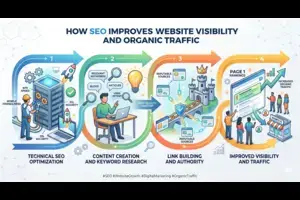
SEO is a powerful digital marketing strategy that significantly improves website visibility and organic traffic. By optimizing content, targeting relevant keywords, enhancing user experience, building authority, and maintaining technical excellence, businesses can achieve higher search engine rankings and attract qualified visitors.
Unlike short-term marketing tactics, SEO provides sustainable growth, increased credibility, and long-term business success. As competition continues to grow online, investing in SEO is no longer optional—it is an essential strategy for businesses that want to expand their reach, connect with customers, and thrive in the digital marketplace.
In Cubetechworld, Organizations that consistently implement effective SEO practices can enjoy greater visibility, stronger brand recognition, and a steady flow of organic traffic that supports business growth for years to come.

.webp)